Transcranial magnetic stimulation, or TMS, is a non-invasive treatment that uses targeted magnetic pulses to gently stimulate nerve cells in the parts of the brain linked to mood, memory and the stress response. For people living with post-traumatic stress disorder (PTSD), TMS is offered when symptoms such as intrusive memories, hypervigilance and disturbed sleep have not lifted enough with therapy or medication alone. Rather than relying on drugs that travel through the whole body, TMS delivers focused energy to specific brain circuits, and a full course is typically completed in an outpatient clinic without the need for anaesthesia or a hospital stay.
What Is TMS and How Does It Work?
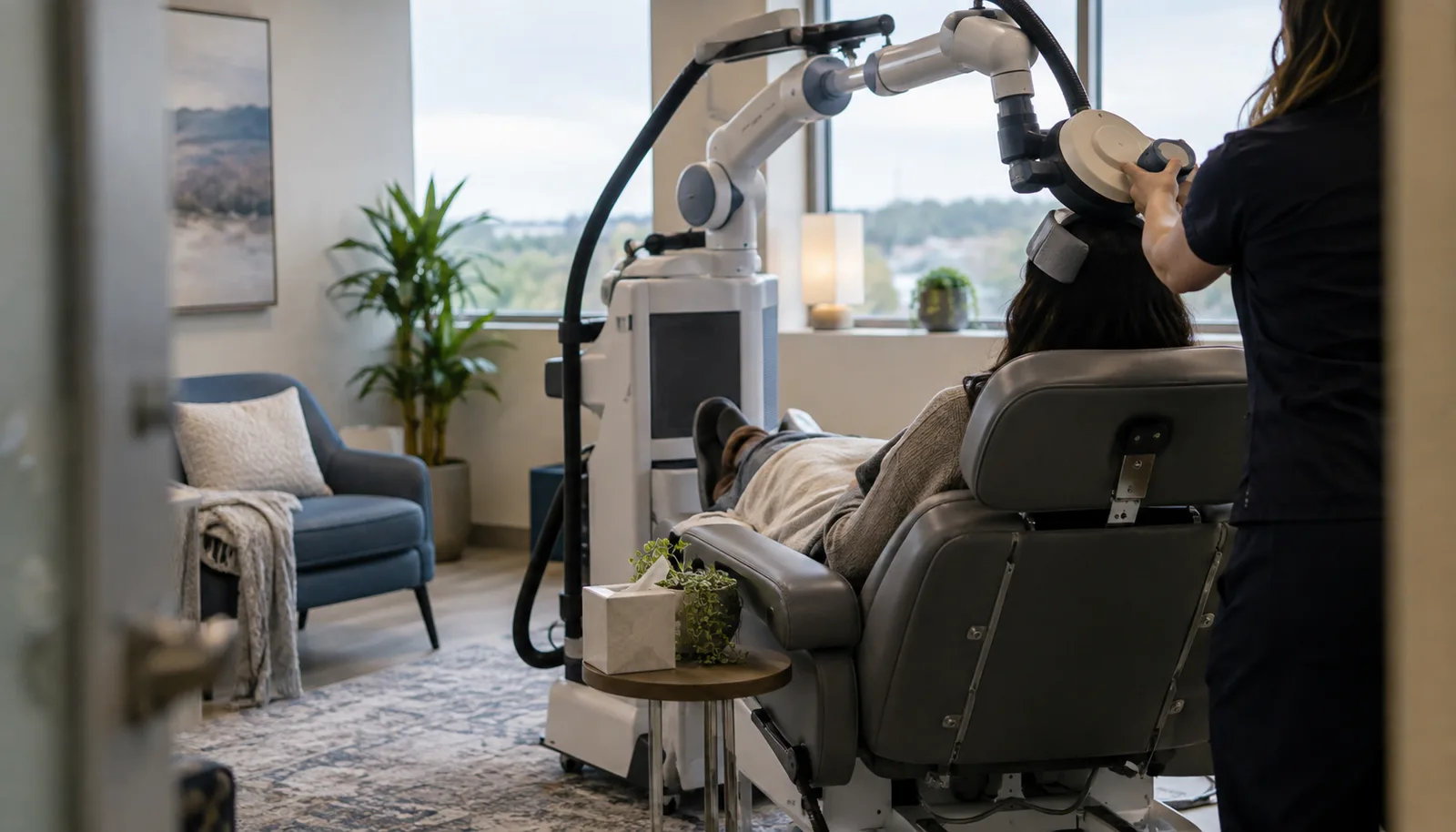
TMS works by placing a soft, figure-eight shaped coil against the scalp, near the forehead. The coil produces a magnetic field that passes easily through the skull and creates small electrical currents in the brain tissue underneath. These currents can change how brain cells communicate with one another, which is why TMS is described as a form of neuromodulation rather than a medication or a talking therapy.
In depression, the most common target is the dorsolateral prefrontal cortex, an area involved in regulating mood. In PTSD, treatment often focuses on circuits that link the prefrontal cortex with the amygdala, the brain's threat-detection centre, which tends to be overactive in people living with the condition. By gently resetting communication in these circuits, TMS aims to reduce the intensity of fear responses and intrusive thoughts over a course of treatment. For a plain-language overview of PTSD and how the brain responds to trauma, the National Institute of Mental Health provides a useful starting point.
Who Might Consider TMS for PTSD
TMS is not usually the first treatment a person tries. Most clinical guidelines begin with trauma-focused psychological therapy, such as cognitive behavioural therapy, and sometimes with medication. When those options have been tried and symptoms remain, or when side effects are difficult to tolerate, TMS becomes a reasonable next step to discuss.
It may also suit people who would prefer to avoid the systemic side effects of oral medication, such as weight gain or sedation, or who cannot take certain drugs because of other health conditions. TMS is generally well tolerated, and because the magnetic pulses are targeted, most people experience no lasting cognitive effects. The US Department of Veterans Affairs maintains practical information about PTSD treatment options and how care is typically sequenced, which can help you understand where TMS fits.
What a TMS Treatment Course Involves
A standard course of TMS involves a series of short sessions, usually around 20 to 30, delivered several times a week over roughly a month to six weeks. Each session lasts about 20 to 40 minutes, and because no anaesthesia is required, you can drive yourself to and from appointments and return to normal activities immediately afterwards.
During a session you sit in a reclined chair while the coil is positioned against your head. You may feel a tapping sensation on the scalp and hear a clicking sound from the machine, and the intensity is adjusted to a comfortable level. Some people notice a mild headache or scalp discomfort in the first few sessions, but this usually settles quickly. Because response builds gradually, most clinics review progress partway through the course and adjust the treatment plan if needed.
TMS does not require anaesthesia, and most people return to their normal routine immediately after a session.
How TMS Compares With Other PTSD Treatments
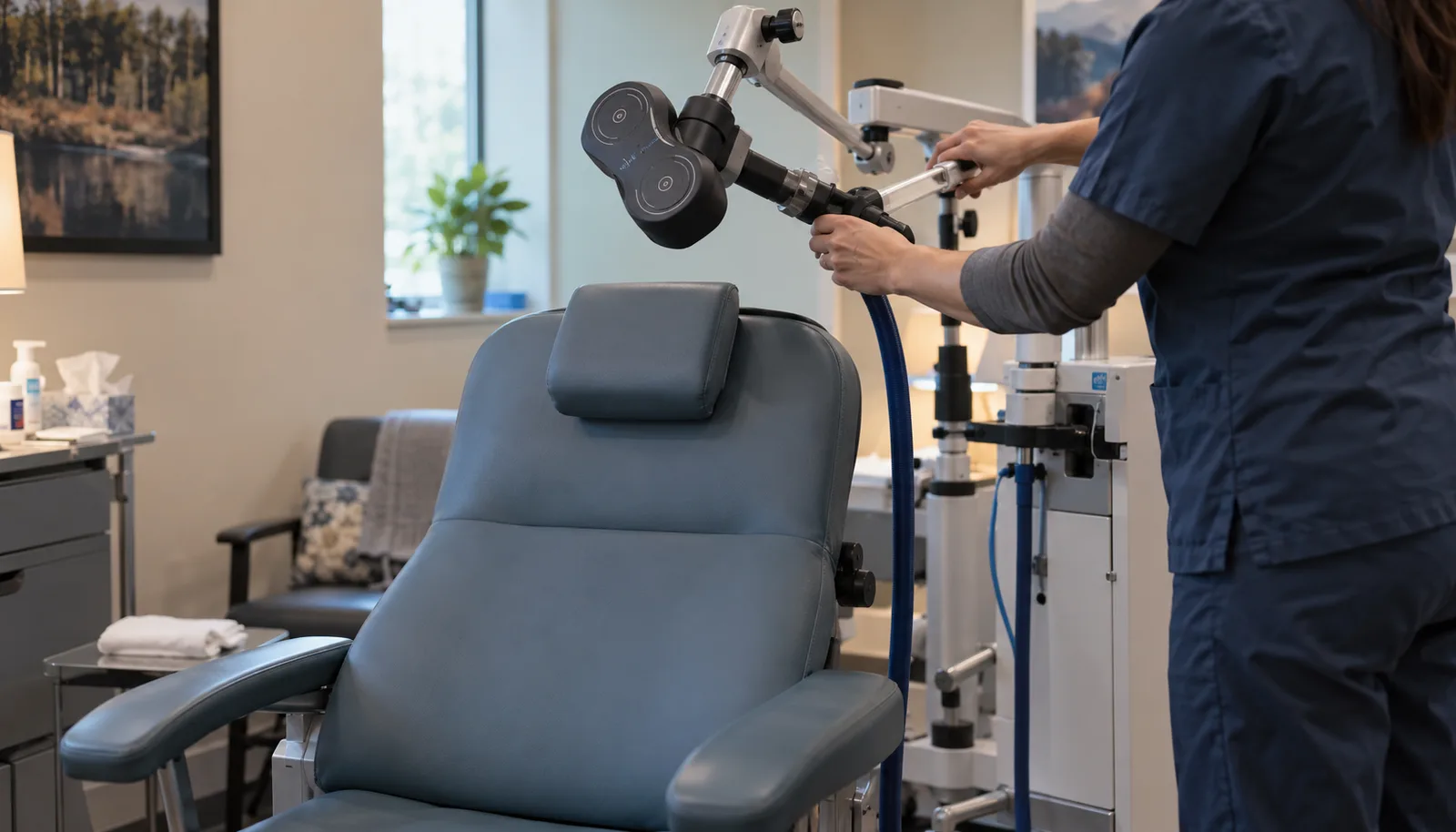
TMS is often confused with electroconvulsive therapy, or ECT, but the two are very different. ECT intentionally triggers a controlled seizure under general anaesthetic and carries a higher risk of memory-related side effects. Standard TMS does not involve a seizure, does not require general anaesthetic, and has a much lighter side-effect profile, which is why it is sometimes preferred by people who have found other treatments difficult.
It also differs from tDCS, a related technique that uses a weak electrical current rather than magnetic pulses. Some clinics, including Neuralia TMS, offer both approaches and can help match the right option to your symptoms and history. TMS is not a replacement for psychological therapy; many people continue counselling while undergoing treatment, and the two can work together. Pharmacogenetic testing, which looks at how your body metabolises certain medications, is another tool some clinics offer alongside TMS to help guide prescribing decisions.
Questions to Ask Before You Start
Before committing to any course of treatment, it helps to be clear about expectations and practicalities. A short list of questions worth asking your provider includes:
- What experience does the clinic have treating PTSD specifically, rather than depression alone?
- How many sessions will I need, and how will we measure whether it is working?
- What does a session feel like, and what side effects should I watch for?
- Can I continue my current therapy and medication during the course?
TMS for PTSD is a genuine treatment option for people who have not found enough relief elsewhere, but it works best as part of a broader, personalised plan. If you are in Australia and considering whether TMS is right for you, organisations such as the Black Dog Institute offer reliable, independent information on PTSD and the treatment options available, and an experienced clinician can help you weigh the benefits against your own situation.